The Gambler's Fallacy Explained
A losing streak doesn't mean you're about to win next time, because the next event is still random.

Life is full of risks. Gambling at a casino or betting on an online roulette wheel carries similar risks. The odds don't remember, even though time feels up when consecutive losses run your bankroll down to zero or beyond.
That’s why the Gambler’s Fallacy - also known as the Monte Carlo Fallacy - is a tragically optimistic belief for punters. Powered by near-miss outcomes and artificial illusions of control, gamblers expect their luck to change, even as it keeps folding from bad to worse.
Why “due” feels true
The Gambler’s Fallacy is the mistaken belief that past results affect future odds. It leads players to think a particular outcome is "due" after a streak, even though every wager remains independent. The core misunderstanding here is assuming the casino "balances things out" - that a near-miss means a win is coming, or that a losing run must end in a win, or that because black has been hit in the last 25 spins, M26’s rotation must necessarily yield red.
This kind of “due” thinking causes players to keep chasing their losses, pushing credit limits further and losing because the events themselves are still random. Trying to beat a game that’s rigged against you is a mug's game.
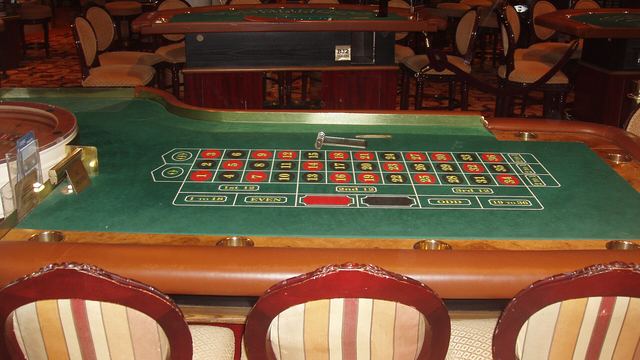
Mathematically speaking, the roulette wheel has no memory. Each time it spins, the probability of landing on red, black, or green is the same. In a casino’s standard European roulette, black and red each have 18 numbers, while the single green pocket is 0. This gives each colour a 48.6% chance of landing, with 2.7% going to the green. Like coin flips, a roulette ball's history has no impact on its future. These probabilities are hard-coded, like computer code, to trigger exactly the same way every time, no matter what's coming out the hopper on location. There's no magic or balance in a stack of dominoes when it all falls over, any more than a gambler on losing streak.
Still, some gamblers get caught up in believing the sequence of wins and losses "owes" them a win. This belief can be dangerous, as it can lead to compulsive gambling, chasing losses, and other problematic behaviours. Like trying to milk water from a coconut on the beach, it looks fun but you'll only get a suntan, sunburn, and sunstroke if you keep chasing it.
The Monte Carlo story
One of the most infamous examples of the Gambler’s Fallacy in action is the 1913 incident at the Monte Carlo Casino. On the night of 18 August, the roulette ball landed on black 26 times in a row.
Meanwhile, the smart punters lost millions because they convinced themselves that the penny must have dropped because, well, all the numbers were black, weren't they?
The next-time thinking never sits right because, mathematically, the casino knows that 26 times in a row makes M27's 48.5% chance of landing on red or black as good as ever. The events were independent and the probability did not change.
As history records, far from balancing out, the run continued for more spins, totaling a record-breaking streak of blacks. In the end, the house wins. Every time.
Why people keep chasing losses
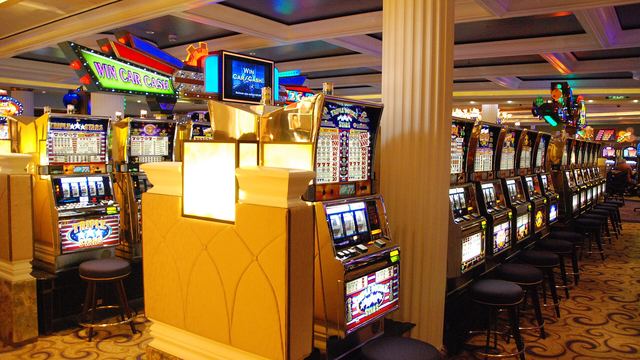
Roulette wheels keep spinning, coins keep flipping, and slot machines keep whirring, but the gambler’s luck never seems to change.
One reason is the near-miss effect. When the roulette ball lands just shy of your chosen number, or when the slot machine’s reels spin hauntingly close to a massive jackpot, your brain interprets that as a close call. The more near-misses you experience, the more likely you are to believe that a big win is just around the corner, even though the odds haven't changed.
Then there’s the illusion of control. When you’re wearing your lucky hat, your mind tricks you into believing you have some sort of sway over the game’s random outcomes. Maybe it’s the way you blow on the dice or the ritual you perform before pulling the slot machine lever. But the truth is, the house always has the upper hand, and your perceived control is just a mirage.
These cognitive biases, combined with the gambler’s fallacy, can create a dangerous cycle of chasing losses. The more you lose, the more you convince yourself that a win is “due” and that your next bet is the one that will turn your luck around.
To cope, setting aside a budget and quitting when you're in the red can help manage gambling risks.
Keep your bets safe and sensible
After all, the key to responsible gambling is to understand the risks involved and to bet within your means. The Gambler’s Fallacy is a trap that can lead to irrational decision-making and potentially ruinous debt. By educating yourself on the true nature of probability and the psychology behind gambling, you can empower yourself to make smarter, safer betting choices.
The National Gambling Helpline is free and confidential, open 24 hours a day: 0808 8020 133. More options on our help page.